
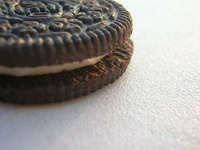
 [Repost from older blog. Original posting date: Sept. 23, 2008] The case of venerable American company Kraft Foods and their foray into the Chinese market with the top brand in their Nabisco cookie line—the iconic Oreo—is a great example of a crucial tenant of branding: your brand is unlitmately not yours—it’s the world’s.
The Oreo has long been the best-selling cookie in America (a Kraft claim that no one seems to be disputing). It’s now also the best-selling cookie in China—but this wasn’t always so for the tasty two-toned treat. When Kraft Foods first unveiled the cookie to the Chinese in 1996, and then up until 2005, sales were less than stellar. Into the picture came a Kraft veteran, 37-year-old Shawn Warren, who had spent years marketing and promoting the Nabisco brands around the world. Warren could see that change was needed. But what?
First, he listened to the marketplace seeking insight into why the Oreo wasn’t selling well, and learned that: a) the Chinese aren’t big cookie eaters to begin with; b) they thought the Oreo as we know it here in America was too sweet, and c) they found the price expensive for a quick snack. Also important, Warren noted two related trends: that the Chinese are increasing their taste for milk in their diet and that the cookie-wafer segment of the Chinese market was the fastest-growing, lead by Kraft’s rival Nestlé SA.
Armed with this customer insight, Warren guided Kraft to make a bold strategic move: change the iconic cookie to meet the needs of the target consumer. For the first time in its history, Kraft redesigned the Oreo for a foreign market. They developed and tested 20 prototypes of a new Oreo more suited to Chinese tastes and economic needs. They made a wafer-style treat that had four thin layers of the famous dark-and-light combo, was coated in chocolate, and less sweet. The Chinese packaging was redesigned to refer to the product as a “biscuit,” not a cookie, and less wafers were included per pack, allowing the price to be lowered. Then a grassroots marketing & promotion campaign commenced to educated Chinese snackers that the Oreo is traditionally paired with milk. The company introduced an Oreo apprenticeship program at 30 Chinese universities, which drew 6,000 applicants. Three hundred of the best were trained as Oreo brand ambassadors, who went around doing things like handing out the new treat on bicycles decorated with Oreo wheels, or at Oreo-themed basketball games that reinforced the idea of “dunking” in milk. All these tactics were decided at the local level. Today the Chinese version of the Oreo is the best-selling biscuit in the country and the company is planning to expand to different regions in Asia.
The point? That while your organization’s vision for its brand may not change (i.e. the company’s brand ideals & mission), the execution of your brand attributes, services to your customers, and—in particular—your products do change. Especially the successful ones, because their growth causes them to forary into new markets and test the boundaries of their brand elasticity.
As company leaders and representatives of your brand, you should understand that you do not determine what your brand is. The marketplace does. A brand is not a marketing slogan or an ad campaign or corporate vision statement. A brand is the sum total of all the perceptions, beliefs, associations, assumptions, and feelings about your company or line of products by your customers, the marketplace, and the public-at-large. They ultimately determined what your brand is. Thus, your brand will change over time.
What you, the company, determine is your brand vision—what you ideally wish that sum total would add up to. Your company is on one end of this on-going conversation and the marketplace is on the other, and you should always be trying to lead the conversation toward that ideal vision for your brand. Sometimes this might mean changing iconic attributes of your product or brand identity that have now become what we at HeLT call off-brand in comparison your ideal.
Brand-building then becomes a back-forth dialog. The world will change the way you express your brand ideal via your products and services, either because you are proactively listening and responding to the consumer—like in the case of Orea cookie in China—or because you have passively allowed yourself to be branded right out of the competitive marketplace.
SUMMARY: Product developers, editors, producers, and executives should not be afraid to make informed changes to traditional attributes of your branded products—even your most successful ones. Brand attributes are often perceived differently in different markets and at unique times in the history of your brand. Change is warrented at times to draw customer perceptions back in line with your brand vision. And remember, sometimes these changes go down better with a little milk.
References: “Kraft Reformulates Oreo, Scores in China” by Julie Jargon, Wall Street Journal, 5/1/08


